
Uncategorised
Is Buying Liquidation Pallets Worth It?
Jul
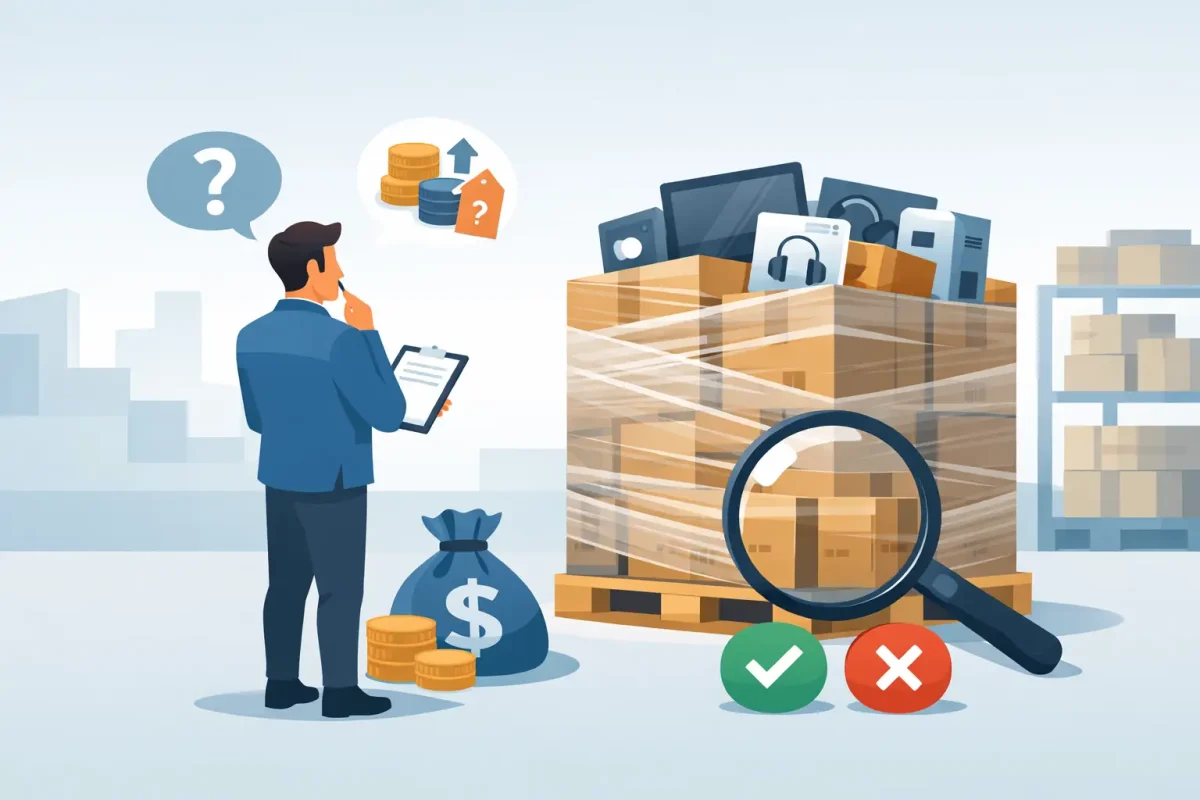
One pallet can turn into a fast cash cycle or a warehouse headache. That is the real answer behind the question, is buying liquidation pallets worth it. For resellers, store owners, bin operators, and online sellers, the value is not in the pallet itself. It is in the spread between your landed cost and what you can realistically recover.
That spread can be strong. Liquidation pallets give buyers access to branded merchandise, mixed categories, and lower unit costs than traditional wholesale. But low buy-in does not automatically mean high profit. Condition mix, category selection, freight, testing time, and sell-through speed decide whether a pallet performs or stalls.
Is buying liquidation pallets worth it for resellers?
Yes, often it is – if you buy with a margin plan instead of a treasure-hunt mindset.
That distinction matters. New buyers sometimes look at liquidation as a shortcut to easy money. Experienced buyers look at it as inventory math. They know some lots are built for fast flips, some are better for bundle sales, and some only work if you have the channels to process returns, grade items, and move lower-value units in volume.
If your business can sort inventory quickly, price accurately, and sell across more than one channel, liquidation pallets can create a serious edge. You can source overstock, shelf-pulls, customer returns, and end-of-life goods at a discount, then break that inventory into higher-margin resale units. That is where the opportunity sits.
If you do not have a clear exit strategy, the same pallet can tie up cash, labor, and storage space. A great price per unit means very little if your team cannot process the merchandise or your customers do not want it.
What makes a liquidation pallet profitable
Profit starts before checkout. The buyers who do best in liquidation are not just finding cheap inventory. They are buying inventory with a purpose.
The first factor is category fit. Tools, home goods, toys, apparel, baby products, electronics, footwear, and general merchandise all behave differently. Some categories move fast with light testing and easy visual inspection. Others require more labor, more product knowledge, and more post-purchase support. A pallet of shelf-pull apparel can be a cleaner play than a pallet of untested electronics, even if the electronics look more exciting on paper.
The second factor is condition. Overstock and shelf-pulls usually offer a more predictable path to resale than heavy-return loads. Customer returns can still be profitable, but only if you know how to grade, test, refurbish, part out, or bundle. Buyers who treat every load like premium inventory usually get punished by reality.
The third factor is your sales model. A flea market vendor, a bin store operator, an Amazon seller, and a discount retailer can all buy liquidation pallets – but they should not all buy the same pallets. A bin store can absorb mixed-condition inventory better than a seller who needs individually listed items with clean packaging. A local discount store may love mixed truckloads that an ecommerce seller would avoid.
Then there is volume. Margins can improve when you buy deeper, because you spread freight and sourcing costs across more units. But scale only helps if your operation can turn that inventory quickly. Buying two pallets you can sell in three weeks beats buying ten that sit for four months.
The costs buyers underestimate
A lot of pallet buyers focus on invoice price and ignore the real landed cost. That is where deals start looking better than they actually are.
Freight is the obvious one. A pallet that looks cheap can lose its edge once shipping is added, especially on bulky categories or longer routes. Then come the hidden operational costs: unloading, sort time, inspection, cleaning, testing, reboxing, disposing of unsellable items, and storage. None of those costs show up in the product title, but all of them hit your margin.
Time is another cost. If your team spends two full days processing a difficult pallet, that labor belongs in the deal math. So does delayed cash flow. Inventory that takes 90 days to move is not equal to inventory that turns in 14 days, even if gross margin looks similar.
This is why transparency matters so much in liquidation. Manifested lots, clear category descriptions, and realistic condition expectations help buyers make decisions based on recovery potential, not guesswork. That does not remove risk, but it makes the risk easier to price.
When buying liquidation pallets is worth it
Liquidation pallets tend to be worth it when three things line up: your buy cost is low enough, your processing system is efficient enough, and your resale channel is strong enough.
For many businesses, the sweet spot is inventory that lands below traditional wholesale but does not require major repair or mystery grading. Shelf-pulls, overstock, and cleaner mixed lots often hit that balance. They give buyers room for margin without forcing a full refurbishment operation.
They are also worth it when you have multiple ways to monetize the load. Maybe the best units sell online at full resale price, mid-tier units move through your store or flea market booth, and lower-grade pieces get bundled into discount bins. That layered strategy can turn a mixed pallet into a high-recovery purchase.
Liquidation gets stronger as a sourcing channel when consistency improves. If you can buy from a supplier that offers broad inventory access, clear lot details, and repeatable categories, you can build a more reliable replenishment model instead of chasing random one-off scores.
When buying liquidation pallets is not worth it
Not every buyer should start here, and not every lot deserves your cash.
If you are undercapitalized, a bad pallet hurts more. If one slow-moving load blocks your working capital, you lose flexibility on the next deal. The same goes for limited storage. Inventory stacked in a garage or crowded stockroom gets expensive fast when it sits.
It may also not be worth it if your business depends on near-perfect condition. Some resale channels are unforgiving. If your customers expect pristine packaging, complete accessories, and minimal defects, you need to be selective about lot type and source. Buying general returns for a channel with strict quality expectations is usually the wrong play.
It is also a weak fit if you do not know your market. Branded inventory at a discount sounds great, but brand alone does not create sell-through. You need to know what your customers buy, what price points move, and how fast you can turn different categories.
How to decide before you buy
Start with recovery, not retail. Many new buyers calculate potential sales using the highest online listing they can find. That is fantasy math. Use conservative resale values based on your actual channel, your expected condition mix, and your average time to sell.
Next, estimate your recovery range. Best case, expected case, and worst case. If the pallet only works under best-case assumptions, it is not a strong buy. Good deals can survive a few bad surprises.
Then check your process. Can you receive the pallet easily? Do you have staff to sort it? Can you test items if needed? Do you have packaging supplies, photo space, listing capacity, and room to hold inventory? Operational bottlenecks can kill profitable buys.
Finally, buy for your lane. If you are strong in toys and home goods, stay there until your numbers are dialed in. Expansion is fine, but random category jumps usually create avoidable mistakes.
A smarter way to buy pallets
The best liquidation buyers are disciplined, not lucky. They do not chase every cheap lot. They buy where they understand the category, trust the sourcing, and can move inventory fast.
That usually means looking for a supplier that offers transparent lot information, visible pricing, broad category access, and the ability to scale from pallets into larger bulk buys over time. For serious resellers, that consistency matters as much as the discount itself. A business cannot grow on mystery alone.
For example, buyers working with a source like Deal Hunter Liquidation are usually looking for more than a one-time flip. They want access to inventory they can actually build around – pallets and truckloads with enough variety, enough value, and enough clarity to support repeat buying.
The real answer on pallet value
So, is buying liquidation pallets worth it? For the right buyer, absolutely. It can open access to branded inventory, improve unit economics, and create room for strong resale margins. But pallets reward operators, not gamblers.
If you know your numbers, understand your customer, and buy inventory that matches your sales channel, liquidation can be one of the most effective ways to source for profit. If you buy based on hype, retail price comparisons, or wishful thinking, it gets expensive fast.
The smartest move is not to ask whether pallets are good or bad. Ask whether a specific pallet, at a specific landed cost, fits your exact resale model. That is where the money is.

https://shorturl.fm/kmq9m
https://shorturl.fm/fpsFv
https://shorturl.fm/qUtk6