
Uncategorised
Mixed Merchandise Pallets Wholesale for Resale
Jul
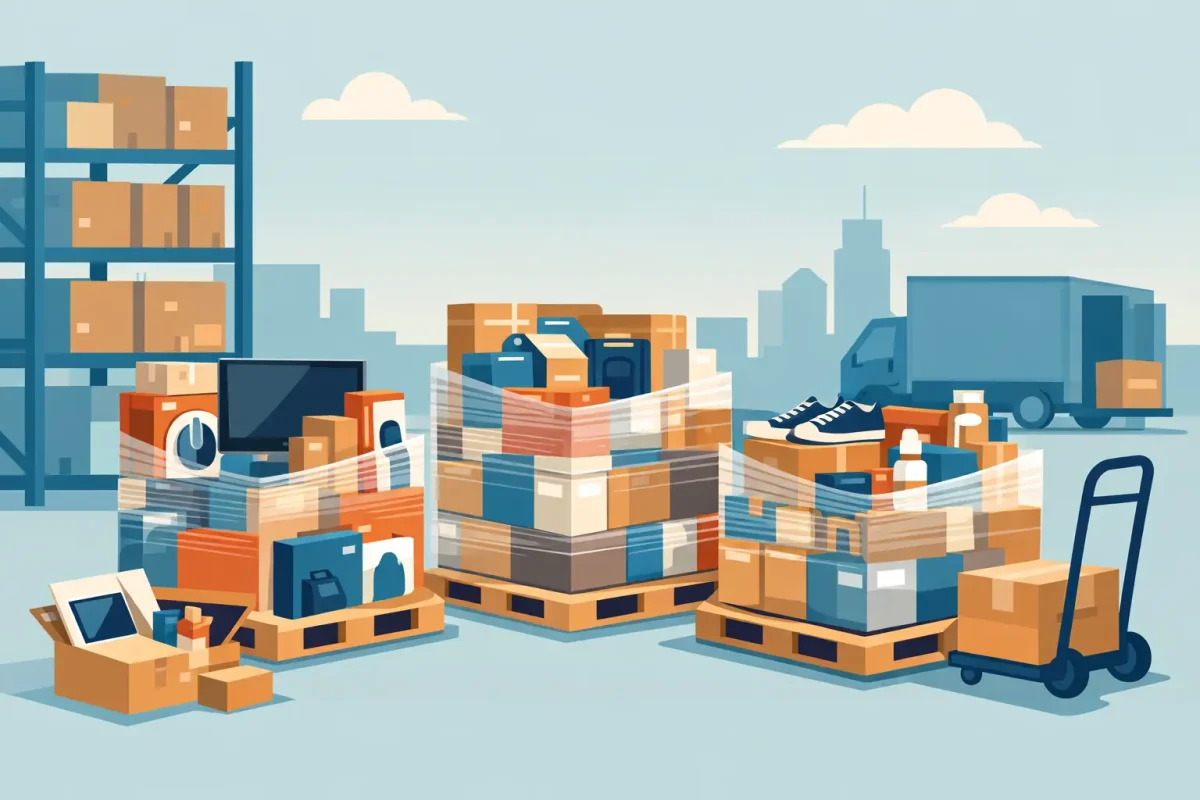
A pallet can look like a random assortment until it starts producing sales across three different channels. That is the advantage of mixed merchandise pallets wholesale buyers understand: one purchase can supply a bin store, online listings, flea market tables, and local retail shelves at the same time. The opportunity is real, but profit comes from buying the right lot, understanding its condition, and moving the inventory with a plan.
Mixed general merchandise gives resellers broad product exposure without requiring separate buys for every category. Instead of tying up capital in one narrow product line, you can acquire a working mix of home goods, toys, apparel, electronics, tools, baby products, footwear, and other resale-ready items. The trade-off is that variety requires better sorting and smarter channel selection.
Why Mixed Merchandise Pallets Wholesale Works
A focused pallet of one category can be a strong buy when you already know that category well. A mixed pallet is often the better play when your business needs inventory depth, faster replenishment, or more ways to recover your investment. One lot can create high-value individual listings, affordable in-store merchandise, bundle opportunities, and clearance inventory.
That flexibility protects your margins. A branded item with strong demand may cover a meaningful share of the pallet cost on its own. Mid-value items can fill your shelves or online store, while lower-ticket goods can drive traffic through bins, bundles, live selling, or marketplace lots. You are not relying on a single SKU or one customer type to make the purchase work.
Mixed lots also help new resellers learn where their demand actually is. A seller may think electronics are the main opportunity, then find that home goods, children’s products, or name-brand apparel turns faster in their local market. Buying variety provides real sales data without committing to a full truckload of one product category.
The Margin Starts Before You Buy
Liquidation inventory is priced for opportunity, not certainty. Customer returns may include unopened items, products with damaged packaging, incomplete units, used merchandise, or items that need testing. Shelf-pulls and overstock can offer cleaner condition, but each lot must still be evaluated based on the information available.
Start with the total landed cost. Your purchase price is only one part of the deal. Add shipping or pickup expenses, sales tax where applicable, unloading labor, storage, sorting time, cleaning supplies, testing, marketplace fees, packaging, and expected losses. A pallet that appears cheap can become expensive if it requires extensive labor or arrives with a condition mix that does not match your sales model.
The right question is not, “What is the estimated retail value?” Retail value is a reference point, not your expected revenue. Ask what percentage of the inventory you can reasonably sell, at what price, through which channel, and over what period. Conservative projections produce better buying decisions than optimistic retail comparisons.
For example, an item with a $50 retail price may sell online for $24 after condition discounts and platform competition. After fees, packing, and shipping, your net is lower still. That can be a great result if the pallet cost supports it. It is not a great result if your business depends on recovering full retail pricing.
What to Review Before Purchasing a Pallet
Transparency is a competitive advantage in liquidation. When available, review manifests, condition descriptions, photos, category details, estimated quantities, and any known notes about the merchandise. A manifest can help you model likely resale value, but it should not be treated as a guarantee of exact item condition or sell-through.
Before committing capital, work through these five checks:
- Confirm the merchandise condition: returns, overstock, shelf-pulls, or a blended lot all carry different risk.
- Compare the listed categories with your actual sales channels and customer demand.
- Estimate the full landed cost, including freight, handling, and the labor required to process the pallet.
- Identify your best-case items and your likely slow-moving items before the inventory reaches your warehouse.
- Verify whether pickup, shipping, dock access, and receiving requirements fit your operation.
Photos matter because they show more than product types. They can reveal package condition, the degree of assortment, pallet density, visible brands, and whether the lot appears to include bulky products that may be harder to ship. If questions remain, get clarity before the order is placed. Fast-moving deals reward decisive buyers, but rushed buying is not the same as disciplined buying.
Match the Pallet to Your Resale Model
The best mixed merchandise pallet is not necessarily the pallet with the largest estimated retail value. It is the one your operation can process and sell efficiently.
Bin stores often benefit from broad, approachable categories and a large quantity of lower to mid-ticket items. Their advantage is speed: merchandise can be sorted, priced by bin day, and turned into store traffic quickly. A pallet with too many high-value, individually shippable items may be better reserved for online resale instead of being dropped into discount bins.
Ecommerce sellers should favor lots with recognizable brands, compact products, clear model numbers, and items that can be tested or inspected efficiently. The goal is to avoid spending twenty minutes researching a product that can only generate a few dollars of net profit. Build a process for triage: list the best items individually, bundle compatible mid-tier items, and move low-value inventory in local lots or clearance channels.
Flea market vendors and small retail stores can use mixed inventory to keep displays fresh. Regular customers notice when the same merchandise sits too long. A changing assortment of household goods, toys, apparel, seasonal products, and practical everyday items gives shoppers a reason to come back.
Sorting Is Where Value Gets Created
A liquidation pallet is purchased in bulk, but it should not be sold as one undifferentiated pile. Your first day of processing determines how much value you recover.
Separate items into clear groups as you unload: premium branded merchandise, online-listing candidates, store-ready goods, bundle inventory, damaged or incomplete items, and product requiring further testing. This keeps strong merchandise from being buried under low-value goods and prevents your team from handling the same item repeatedly.
For electronics, powered tools, and other functional products, test early. A quick test can tell you whether an item belongs in a higher-value resale channel, a parts lot, or an unsellable category. For apparel and footwear, inspect for obvious wear, stains, missing tags, and size issues. For home goods and toys, check for broken components, missing pieces, and safety-related concerns before listing or displaying them.
Do not let low-value inventory consume high-value labor. If an item will only produce a small return after extensive cleaning, research, photography, and shipping, it may be better as a bundle or local clearance piece. Margin is not just what you sell an item for. It is what remains after the work required to sell it.
Build More Than One Exit Channel
The strongest liquidation buyers do not depend on one marketplace. They create several exits for inventory because mixed pallets naturally contain merchandise with different selling potential.
Use your fastest channels for straightforward, lower-priced goods. Reserve detailed product listings for recognizable brands and higher-margin items. Bundle complementary products when individual shipping costs would eat the profit. Move bulky, fragile, or low-demand merchandise locally when shipping makes no financial sense.
This approach also improves cash flow. Waiting for every item to sell individually can trap money in storage. It is often smarter to recover capital quickly from the middle and lower tiers while holding only the best inventory for full-margin sales. Inventory turnover gives you the buying power to pursue the next deal.
Scale From Pallets to Truckloads Carefully
A successful pallet program can become the foundation for a larger resale operation, but scale should follow proven process. Before moving into larger volume, know how long it takes your team to receive, sort, test, list, price, and clear a standard pallet. Know your sell-through by category. Know which channels create the best net return, not just the highest advertised price.
Truckloads can improve your cost per unit and give you consistent inventory depth, yet they also magnify mistakes. More volume means more warehouse space, more labor, more freight planning, and more capital tied up in merchandise. Buyers who have already built reliable pallet-level workflows are in the best position to take advantage of full-load opportunities.
Deal Hunter Liquidation serves buyers who need access to resale-focused inventory without wasting time chasing scattered sources. The goal is straightforward: secure discounted merchandise, understand the deal, and turn product into revenue with a process that can grow.
Make Each Pallet Earn Its Next Purchase
Mixed merchandise is not a shortcut to guaranteed profit. It is a purchasing strategy built around variety, recovery, and disciplined resale execution. The buyers who win are not the ones who chase every low price. They are the ones who know their costs, sort fast, protect their best inventory, and move the rest through the right channel.
Treat every pallet as both inventory and intelligence. Track what sold first, what required too much work, what customers asked for, and what sat untouched. Your next purchase should be sharper than the last, and that is how a mixed lot becomes a repeatable margin engine.
