
Uncategorised
How to Buy Liquidation Truckloads Online
Jul
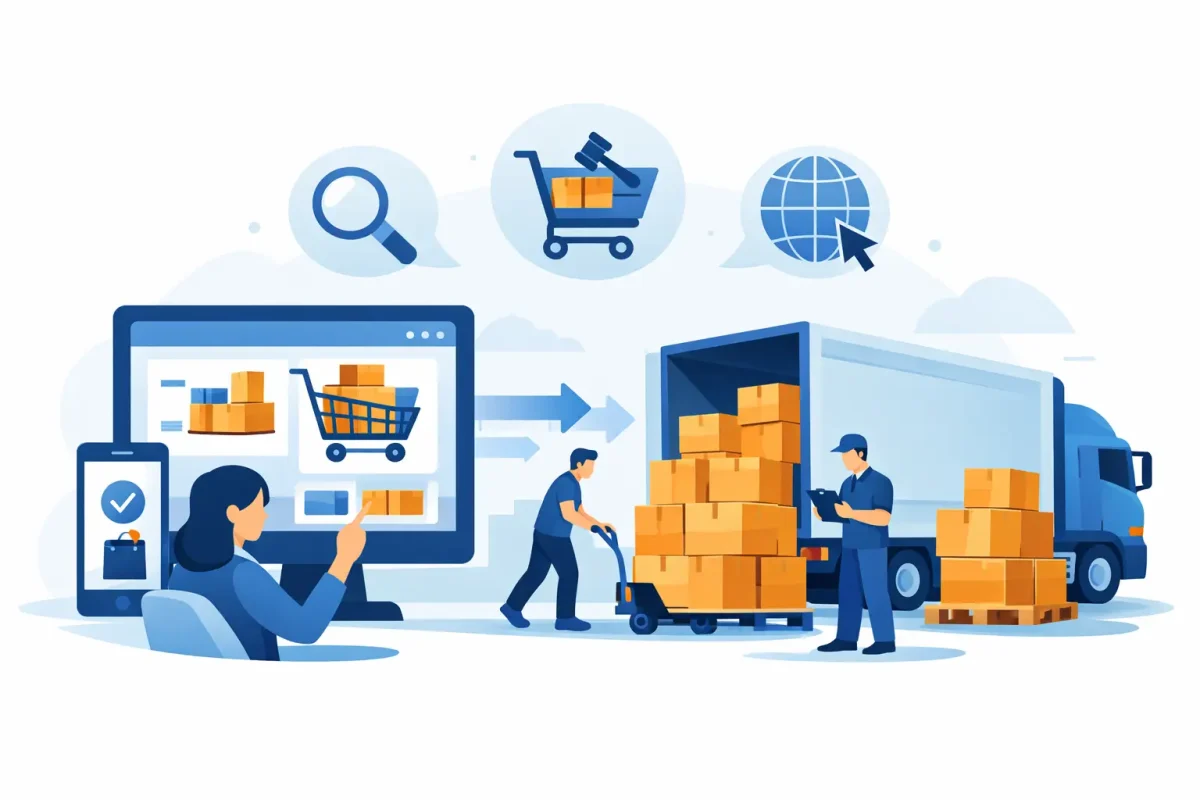
A full truckload can change the economics of your resale business fast. When you buy liquidation truckloads online, you are not just buying more units at a lower cost – you are building a deeper inventory pipeline that can supply a retail floor, bin store, flea market operation, ecommerce catalog, or multiple resale channels at once. The upside is serious, but so is the need for disciplined buying. The best truckload is not the one with the lowest sticker price. It is the one your business can receive, process, price, and turn into cash.
Why Buy Liquidation Truckloads Online?
Truckload liquidation gives established resellers access to volume that is difficult to match through individual pallets or traditional wholesale. A single load may contain customer returns, shelf-pulls, overstock, end-of-life merchandise, abandoned inventory, or mixed general merchandise from major retail channels. That variety gives buyers a chance to source recognizable brands and high-demand categories without paying standard wholesale pricing.
The real advantage is cost per unit. Freight is spread across a larger volume, and truckload pricing can create more room between your landed cost and your resale price. That margin room matters when you need to discount slow movers, account for damaged goods, pay labor, or run promotions without giving away your profit.
Online buying also expands your access beyond local auctions and warehouse contacts. Instead of waiting for a nearby opportunity, you can review available lots, compare categories, inspect manifests, and plan freight from your office. For operators with a proven sales channel, speed matters. Good inventory does not wait around.
That said, truckloads are not automatically better than pallets. If your warehouse is tight, your team is small, or your sales volume is inconsistent, a full load can create an expensive backlog. Scale should follow your processing capacity, not your ambition alone.
Start With Your Sales Channel, Not the Load
Before reviewing available inventory, decide where the merchandise will go after delivery. A mixed truckload can be profitable for a bin store that moves large volumes quickly, but the same load may overwhelm a small boutique retailer. Electronics could bring strong ecommerce returns if your team can test, grade, and list each item. Apparel and footwear may move faster through a store, live sales, or local market booths.
Your best category depends on your buyers and how quickly they make decisions. Tools, home goods, toys, baby products, fragrances, apparel, footwear, and general merchandise all have resale potential, but they do not move at the same speed or require the same handling.
Ask a direct question before you bid or buy: Can we realistically sell through this inventory within our normal cash cycle? If the answer is unclear, move down in volume or choose a more focused load. Inventory is only an asset when it is moving.
Review the Manifest Like a Buyer, Not a Bargain Hunter
A manifest is one of the most valuable documents in liquidation. It can show item descriptions, quantities, retail values, SKUs, categories, conditions, and sometimes product-level details. It gives you a working picture of what is in the load before you commit capital.
Do not treat retail value as expected resale revenue. MSRP is a reference point, not a guarantee. Your business earns money based on what your market will pay, the condition of the merchandise, the effort required to prepare it for sale, and the percentage of the load that is actually sellable.
When reviewing a manifest, look for concentration as well as variety. A load with hundreds of different SKUs can be attractive, but it can also require significant sorting and listing labor. A load with fewer, repeatable products may be easier to merchandise and replenish. Neither model is universally better. The right choice depends on whether you make money through rapid bulk turnover or higher-margin individual sales.
Pay attention to condition labels. Overstock and shelf-pulls often require less work than untested customer returns, while mixed-condition loads can offer a lower entry price with more operational risk. Read descriptions carefully and confirm whether products are new, open box, used, salvage, uninspected, or mixed. Transparency at the buying stage protects margin later.
Calculate Landed Cost Before You Buy
The purchase price is only the starting number. To buy liquidation truckloads online profitably, calculate your landed cost before placing an order. Landed cost includes the lot price, buyer fees if applicable, freight, unloading, warehouse labor, storage, testing, cleaning, repair, disposal, packaging, and marketplace fees.
Freight deserves special attention. A low-priced load located far from your warehouse may cost more than a higher-priced load closer to home. Confirm the pickup location, load dimensions, whether it is floor-loaded or palletized, and whether your receiving site has a dock, forklift, or staff available to unload. Detention charges and failed delivery attempts can turn a good deal into a frustrating one.
Use a conservative recovery estimate rather than your best-case estimate. If the manifest shows $200,000 in retail value, do not assume you will recover a fixed percentage just because the number looks attractive. Build your projection around your actual sales history by category and condition. Factor in expected shrink, missing parts, damaged packaging, returns, and products that will need to be liquidated again at a lower price.
A practical buying model includes three outcomes: conservative, expected, and strong. If the load only works in the strong scenario, it is not a dependable purchase. The best deals still make sense when reality is less generous than the manifest.
Know What You Can Handle at Delivery
A truckload arrives all at once. That sounds obvious, but many buyers focus on acquisition and underestimate receiving. You need enough space to stage the load, enough labor to sort it, and a process for separating ready-to-sell merchandise from items that need testing, cleaning, repair, bundling, or disposal.
Create a receiving plan before the freight is booked. Assign zones for each product condition, establish a way to count and document inventory, and decide how your team will flag high-value items. Fast identification of premium branded merchandise can help you prioritize listings and recover capital sooner.
For mixed general merchandise, speed is often more valuable than perfection. Sort for obvious condition issues, pull out premium or easily marketable products, and move the remainder into the sales channel that fits it best. Spending too much labor on low-value items can erase the advantage of buying in volume.
Ask the Questions That Protect Your Capital
Reliable liquidation suppliers should make it easier to understand what you are buying, not harder. Before purchasing, clarify the lot condition, source type, manifest availability, quantity estimates, pickup requirements, freight options, payment terms, and whether the sale is final.
You should also ask whether the merchandise is sold as-is, whether photos represent the actual load, and if there are known exclusions. Some loads may include a broad assortment but have restrictions on certain brands, channels, or export. A clear conversation before payment is far less expensive than a dispute after delivery.
At Deal Hunter Liquidation, buyers can source pallet and truckload inventory across resale-friendly categories while keeping the focus where it belongs: product mix, pricing, freight, and resale potential. The goal is not to chase random surplus. It is to secure inventory that fits a real sales plan.
Build a Repeatable Truckload Buying System
The strongest liquidation buyers do not rely on one lucky load. They create a repeatable system for evaluating opportunities and tracking results. Keep records by supplier, category, condition, purchase cost, freight cost, processing time, sell-through rate, and total recovery. After several loads, those numbers will tell you which inventory creates the best return for your operation.
Use that information to buy with more confidence. You may find that shelf-pull home goods move quickly in your local store, while untested electronics tie up too much labor. Or you may learn that mixed apparel loads create excellent margins only when you have enough space for size sorting and seasonal storage. The data should shape your next buy.
It also helps to set a maximum purchase amount before you begin shopping. Competitive liquidation opportunities can create urgency, especially when premium brands or recognizable retail categories are involved. A budget keeps you from paying for projected profits that depend on perfect execution.
Turn Volume Into Working Capital
A liquidation truckload is a business decision, not a warehouse decoration. Buy enough volume to support your sales channels, but not so much that your cash gets trapped in unsorted inventory. Focus on clear manifests, realistic landed costs, freight readiness, and merchandise your customers already know how to buy.
The next profitable load is usually not found by taking the biggest risk. It is found by matching the right inventory to the operation you have built, then moving it with speed and discipline.

https://shorturl.fm/udtke
Pingback: Electronics Return Pallets for Resale Profit – Deal Hunter Liquidation