
Uncategorised
What Are Liquidation Pallets, Exactly?
Jul
You have probably seen the term and wondered whether it means cheap junk, hidden gold, or something in between. If you are asking what are liquidation pallets, the short answer is simple: they are bulk lots of merchandise sold below traditional wholesale pricing because a retailer, manufacturer, or distributor needs to move inventory fast.
That speed is the whole point. Liquidation pallets exist because inventory owners want recovery, not storage costs, slow sell-through, or operational drag. For buyers, that creates access to merchandise at pricing that can leave room for strong resale margins. For sellers, it creates a clean path to move overstock, returns, shelf-pulls, abandoned freight, or end-of-life goods without tying up space and cash.
What Are Liquidation Pallets?
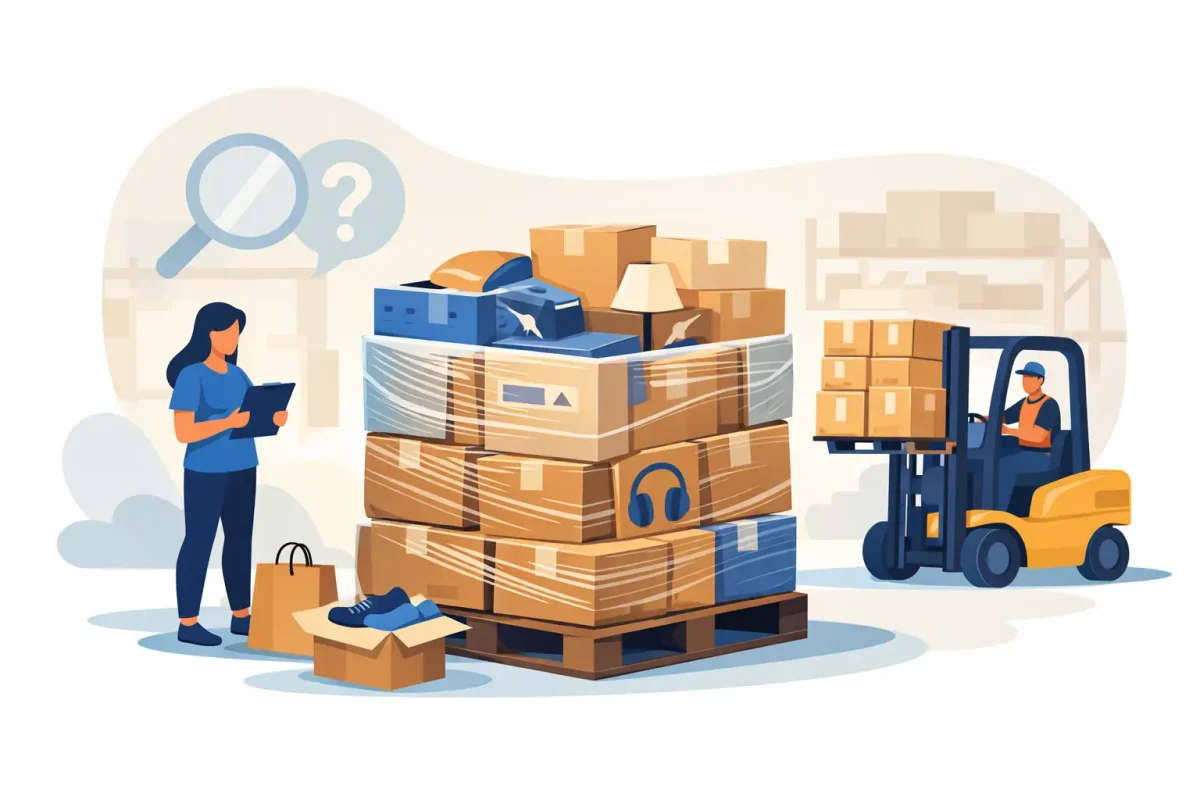
A liquidation pallet is a grouped load of products, usually stacked on a standard pallet, sold as one resale unit. Instead of buying item by item, the buyer purchases a mixed or category-specific lot in bulk. The merchandise can come from major retailers, ecommerce channels, distribution centers, or manufacturers clearing excess stock.
The condition of that inventory varies. Some pallets are overstock, meaning the goods are new but excess to current demand. Others are shelf-pulls, which are products removed from store shelves due to packaging changes, seasonality, or planogram resets. Customer returns are another major source, and those can range from unopened to used, damaged, or incomplete. That is why condition details matter so much when evaluating a lot.
In practical terms, liquidation pallets are a sourcing tool. Resellers buy them to break down the inventory and sell individual items through online marketplaces, discount stores, bin stores, flea markets, auction channels, or local storefronts. The model works when the buy cost, freight, labor, and loss rate still leave enough room for profit.
Why Liquidation Pallets Exist
Retailers and brands are not in the business of sitting on dead inventory. A warehouse full of slow-moving goods ties up working capital, adds storage expense, and complicates replenishment. Returned products create another layer of pressure because they need inspection, sorting, repackaging, or removal. For many companies, liquidation is the fastest way to recover value and keep product flow moving.
That is why pallets get built in the first place. One company wants recovery and operational relief. Another buyer wants discounted inventory with resale upside. When the process is handled well, both sides win.
This is also why liquidation can include a surprisingly broad mix of categories. Tools, electronics, apparel, toys, baby products, home goods, footwear, fragrances, and mixed general merchandise all show up in pallet form. The common factor is not the category. It is the need to move inventory efficiently.
What Comes on a Liquidation Pallet?
The answer depends on the source and the lot type. Some pallets are tightly sorted, such as all tools or all small kitchen appliances. Others are mixed general merchandise with a variety of SKUs and conditions. Some come with manifests, which list products, quantities, and sometimes estimated retail values. Others are unmanifested, meaning the buyer is taking on more uncertainty in exchange for potentially lower pricing.
A pallet might include all new overstock. It might also include a blend of customer returns, open-box items, and shelf-pulls. That difference changes everything – expected sell-through, testing time, refund risk, and the average resale price per unit.
For experienced buyers, this is where opportunity starts. A manifested pallet with recognizable branded products and clear condition notes gives you a more predictable margin model. An unmanifested mixed lot can produce bigger upside, but it can also bury profit under damaged goods, missing parts, or low-demand items. It depends on your sales channel, your labor capacity, and how well you understand your market.
How Pricing Works
Liquidation pallet pricing is usually based on a discount to estimated retail value, but that number by itself does not tell the full story. A pallet with a high original retail value is not automatically a better deal. Retail value is only relevant if the products are in resellable condition and there is real market demand at a profitable price.
Smart buyers look at recovery value, not just retail value. Recovery value is what you can realistically get back after accounting for item condition, platform fees, shipping to your customer, packaging, labor, and any unsellable units. That is the number that matters.
Freight also matters more than new buyers expect. A pallet that looks cheap can stop being cheap once shipping is added. The same applies to testing and sorting. Electronics may carry strong upside, but they often require more time to inspect and more risk tolerance than categories like apparel or shelf-pull home goods.
Who Should Buy Liquidation Pallets?
Liquidation pallets make the most sense for buyers who know how they are going to move inventory before they buy it. If you run an ecommerce store, discount retail outlet, bin store, auction page, or flea market booth, pallets can be a fast way to keep inventory flowing without paying standard wholesale rates.
They are especially useful for buyers who want category flexibility. One week you may need tools or home goods. The next week you may want toys, shoes, or mixed merchandise to fill out a broader assortment. Bulk liquidation gives you access to those swings in demand without locking you into a traditional brand distribution model.
They are less ideal for someone who expects every unit to be perfect, every SKU to be current, and every lot to be easy to process. Liquidation buying rewards operational discipline. You need space, a plan, and realistic expectations.
What Are Liquidation Pallets Good For in Resale?
For many resellers, liquidation pallets are not just cheap inventory. They are margin inventory. The goal is to buy at a level that gives you room to price competitively and still make money after losses and overhead.
That can take different forms depending on your model. An online seller may cherry-pick branded items with strong sell-through and bundle the lower-value units. A bin store operator may monetize volume quickly even if individual item pricing is low. A discount retailer may use pallets to create variety and increase foot traffic. The same pallet can produce very different returns depending on how it is worked.
That is why category fit matters. If you sell apparel well, a mixed electronics return pallet may not be the best use of your cash. If you have staff who can test and grade products, electronics may be a stronger play. Profit is not built into a pallet by default. Profit comes from matching the right inventory to the right resale channel.
How to Evaluate a Pallet Before You Buy
The first thing to check is condition. New overstock, shelf-pulls, customer returns, salvage, and mixed-condition lots all carry different risk profiles. After that, look at whether the pallet is manifested, what categories are included, and whether the products align with your customer base.
Then look at the operational side. How much labor will it take to sort, clean, test, photograph, and list the items? How quickly can you turn the inventory? Fast turnover often beats chasing the highest theoretical margin on paper.
You should also pay attention to supplier transparency. Clear lot descriptions, condition labels, manifests when available, and straightforward shipping terms reduce guesswork. In liquidation, trust is a business advantage. A reliable supplier saves you from expensive surprises and helps you buy with more confidence at scale.
That is one reason many buyers look for established sources like Deal Hunter Liquidation. Access to broad categories, transparent listings, and ready-to-buy pallet and truckload inventory makes it easier to source with a margin-focused mindset instead of gambling blind.
The Trade-Offs Buyers Need to Understand
Liquidation pallets can be profitable, but they are not magic. The lower pricing is there because the inventory comes with complexity. Some units may be incomplete. Packaging may be worn. Product assortment may be uneven. Brand-new overstock pallets can be cleaner and easier to process, but they may also be priced higher than return-heavy lots.
That does not make one better than the other. It means your buying strategy should match your business model. If you need speed and low-touch processing, cleaner lots may be the smarter move. If you have labor, repair capability, and multiple sales channels, rougher lots can sometimes produce stronger recovery.
The biggest mistake is buying based on excitement instead of numbers. A pallet should fit your margin target, your cash flow, your storage setup, and your customer demand. If it does not, even a discounted lot can become expensive.
Liquidation pallets reward buyers who think like operators, not gamblers. If you approach them with a clear resale plan, realistic expectations, and a supplier that values transparency, they can become one of the most effective ways to source inventory with room to win.

https://shorturl.fm/TdTCj
https://shorturl.fm/xJVuK
https://shorturl.fm/m2u7e
Pingback: Wholesale Pallets Truckloads for Resale Margins – Deal Hunter Liquidation
https://shorturl.fm/ncboF
Pingback: Customer Returns Pallets for Resale That Move – Deal Hunter Liquidation
https://shorturl.fm/T8QtJ
Pingback: Overstock Pallets for Resellers That Move Fast – Deal Hunter Liquidation
Pingback: Toy Pallets for Resale With Built-In Margin – Deal Hunter Liquidation
Pingback: Baby Products Liquidation Pallets for Resale – Deal Hunter Liquidation